Wednesday, 22 May 2024

Getting fired up for the Firebird!

Our trip to the NZSO schools' performance of Stravinsky's The Firebird is on the horizon. To help us get the most out of this experience, we are getting to know the fairytale and characters that inspired the music that we will hear.

The best place to start with The Firebird is with the four main characters. In The Firebird, each of these characters has its own musical motifs. Our students in Autahi know that characters are the people (and creatures) that do things in stories. We have invented actions for each of the four main characters in The Firebird.

Brave Prince Ivan 


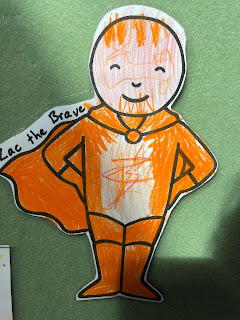
Prince Ivan is the hero. Like all princes, he's brave, handsome and looking for adventure.


Evil King Kastchei


The villain in this story is King Kastchei. He has a sinister garden and magical powers.


Thirteen sad princesses


The sad princesses have been taken prisoner by King Kastchei (boo!). We particularly enjoy acting the part of a sad princess.


The Firebird

The Firebird is the mythical creature who holds the key to defeating the evil king.


The story of The Firebird

Here is a simple version of the storyline. Ask your child if they can help you to tell it, including actions for the characters.

Once upon a time, a brave prince called Ivan, found himself wandering through the gardens of the evil King Kastchei. The gardens were very beautiful, but very sad because all of the plants, trees, birds and animals had been turned into statues. The only living thing was the wonderful Firebird, flying around the garden on flaming wings. 

Prince Ivan cannot resist chasing the Firebird and captures her. Begging for her release, the Firebird promises to help Prince Ivan if he ever needs it. The prince agrees that he will free the Firebird once she has helped him.

Continuing his walk through the garden, Prince Ivan comes upon thirteen princesses who have been frozen like stone. All they can do is blink and cry. Prince Ivan falls in love with one of them.

Along comes King Kastchei. Prince Ivan battles the king. It is a terrible struggle until the Firebird comes to Ivan's rescue and uses magic to send King Kastchei to sleep. While the king is asleep, the Firebird tells Prince Ivan the secret of Kastchei's power. His soul is contained in a golden egg. If Ivan breaks it, Kastchei will die and all his prisoners will be free.

Quietly, Ivan sneaks up on the king and breaks the egg. King Kastchei dies. The trees, plants, creatures and princesses are released from their statues and set free. And they all live happily ever after.

The Firebird

The Firebird is an enchanting, magical creature and we are enjoying imagining what she might look like. Here are the beginnings of our Firebird drawings. 


We chose fiery colours to bring our Firebirds to life. Our finished creations will be on display in Autahi: please come and take a look.


Thursday, 16 May 2024

Letters to Goldilocks


In Writing we explore different text types as a part of our learning. This week we looked into the world of letter writing after reading a book based on Goldilocks and the three bears.

We chose to write from the perspective of the bears and tell Goldilocks how we were feeling.
The children in Autahi showed a great amount of empathy for Goldilocks and many of them chose to apologise for scaring Goldilocks away. 

Check out some examples of our letters....


Kids love to write in all sorts of ways. Making cards or writing letters are great ways that you can practise some writing at home in a way that everyone can have fun.


Wednesday, 8 May 2024

Exercising our Gratitude Muscles

Gratitude is one of our Character Strengths. On our Character Strengths poster, it looks like this:


In our recent Positive Education lessons, Autahi has begun to explore what Gratitude means. We have begun by first noticing the things and people that we are thankful for. We will go on to find ways to turn our Gratitude into action.

Our classroom now has a Gratitude Jar.

This is a simple way to encourage us to notice and capture (in writing or a picture) the moments when we experience Gratitude. Here are some of the things we are thankful for.

Research has shown that noticing and cultivating feelings of Gratitude can improve our wellbeing and resilience.

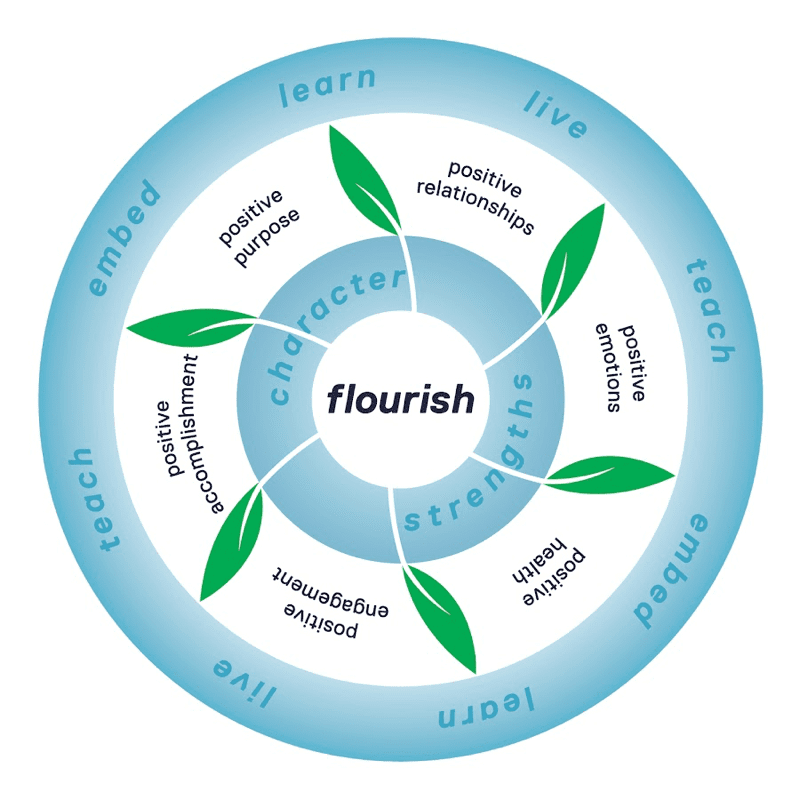
In our Flourish model, Gratitude comes into the sphere of Positive Emotions. While we encourage our students to feel all of their feelings, it is important to learn the skill of cultivating Positive Emotions like Optimism, Appreciation of Beauty and Excellence and Gratitude. 

Discovering Positive Education - New 8-Week Professional Development

A daily practice of noticing the things in life that we are grateful for (they may be very small things!) helps to build our resilience and ability to cope with life's challenges. Positive emotions broaden our attention, leading to more open and flexible thinking (rather than shutting down or flight responses to problems). This is also known as Broaden and Build Theory.

Recalling and revisiting moments that we are thankful for allows us to re-experience the positive emotion. This is important because, as humans, our brains are wired towards a negativity bias. We need to experience a lot more positives to outweigh a few negatives.

By teaching our students how to exercise their 'Gratitude muscles', we hope to help them to develop a habit of noticing positives. Capturing things we are grateful for in a picture or a diary gives us the opportunity to revisit the experience - and reinforce the positive emotion. Doing this as a group makes this even more powerful.

You might like to try this at home, too. Start by asking each other on the way home, "What are you feeling thankful for today?"

And if you would like to know more about Broaden and Build Theory, our Flourish model, or any other aspect of our Positive Education programme, please chat with Beth or Carl.

Friday, 3 May 2024

Exploring patterns

 This week in Autahi, we have begun exploring patterns.

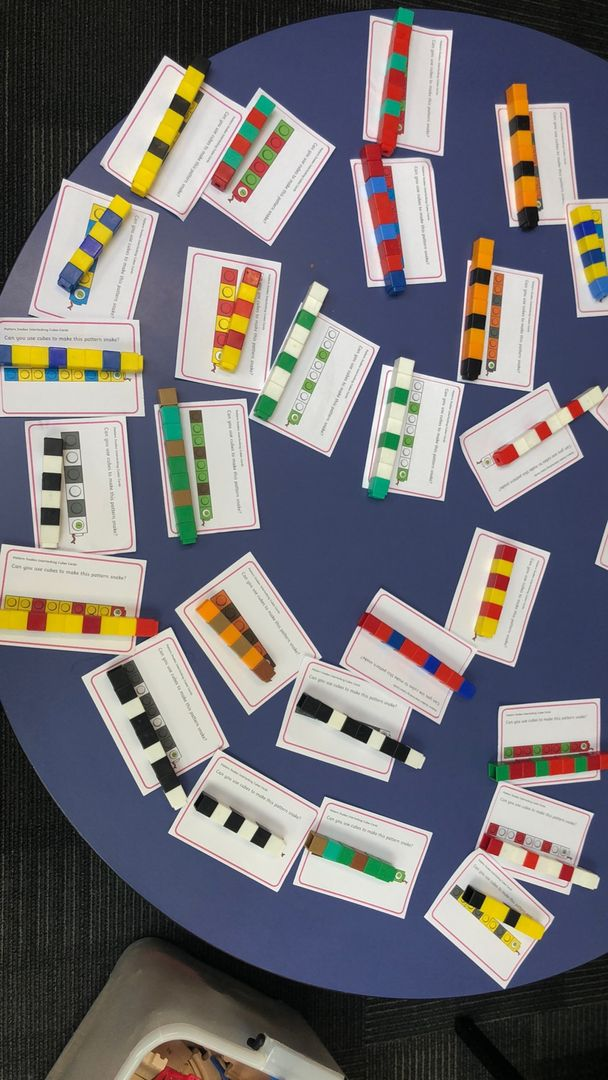
Some patterns are repeating patterns. Others are sequential (like counting, for example). Sequential patterns often contain some kind of growth. This week, we been exploring repeating patterns in shapes and colours, noticing what the pattern is and how it repeat.


We look for patterns in people as well as with numbers. We have been playing guess the pattern with our classmates and looking carefully to spot any repeating patterns. It could go long sleeves then short sleeves.


Pattern is part of our Maths curriculum, but an awareness of how patterns work helps in many areas of our learning. Patterns are not only visual, but also occur in numbers, words and sounds. We will be making plenty of connections between our learning about pattern in Maths and patterns that occur in Music and Art also.


Friday, 12 April 2024

Measuring using non-standard units

This week we have been exploring the concept of measurement in Mathematics. At the beginning of the measurement learning we start to learn the vocabulary associated with measuring things. Using toys from our classroom, we explored which were big, bigger and biggest, long, longer and longest and so on. Learning the key words helps us to think and talk about the concept of measurement and size. 

Organising these foods from biggest to smallest on the washing line helps us to compare objects and notice their relative sizes. It also gives us a great opportunity to practice the mathematical language that we need to talk about size.

Here is a different activity to encourage our students to notice and estimate the relative sizes of objects: make a worm that is BIGGER and a worm that is SMALLER than the worm on the play dough mat. How do we make sure our worms are the right size, especially when they are wiggly?

We also took this learning into our Writing this week.

The next step in our learning has been to begin measuring objects. Eventually, our students will learn how to use standard units of measurement like centimetres and metres. But their first experiences of measuring are with non-standard units like cubes, glue sticks and matchsticks. 


Using non-standard units allows our students to practice the key skills of measuring and develop an understanding of how measuring works without having to grapple with the precision of standard units. When measuring our toys, we made sure that we followed the rules of measuring: start at the beginning of the object, use multiples of the exactly the same thing to measure with, units should touch (no gaps), stop placing units at the end of the object.


Wednesday, 20 March 2024

We love ten frames!

In Autahi, we are keen for our students to have clear visual images to support their growing number knowledge. For this reason, our maths lessons are very practical, using plenty of physical resources such a counters and cubes. 

At level 1 of our curriculum, students are counting groups of objects up to ten. To do this, they need to know the sequence of number words (one, two, three/tahi, run, toru etc.). They also need one-to-one matching. This is the understanding that each object in the group is matched with one word in the counting sequence, thus making sure that each object is counted only one time.

This is what we are practising here. In the activity, the children move each object from one side of the whiteboard to the other as they say each number. That way they know that they have counted each object only once.

At level 2 of our curriculum, we build on this knowledge as we introduce the key idea that our number system is based on groups of ten. Understanding this is vital to working meaningfully with bigger numbers into the teens, tens, hundreds and beyond.

With this is mind, we have been introducing our students to ten frames. This versatile maths resource helps to make these key understandings explicit.

So, what is a ten frame? Well, it is a small grid of two rows of squares, five squares on the top row and five squares on the bottom row. The grid can be populated with counters or other objects to make numbers to ten.


Eventually, we might use multiple ten frames together to show numbers to 100 as several groups of ten and some ones.

Here, we are practising making numbers to ten on a ten frame. 

Building numbers on a ten frame benefits our counting. It provides a a visual for each number to ten, and cements the understanding that there are more counters as we count forwards through the sequence, and fewer counters as we count backwards.

Ten frames are great for developing the skill of subtilising, too: this is seeing small groups of objects and knowing how many there are without having to count (typically, up to five).

When using the ten frames, we learn to fill up the top row of the ten frame first. This enables us to see that all the squares filled makes ten and a whole row is five (without having to count!). Students also begin to explore how numbers bigger than five are 'a group of five and some more'. For example, six is a group of five and one more. It's is the same on our fingers, too.

This is the beginning of the 'part-whole' thinking that builds into our students being able to add and subtract numbers to make ten (knowing that a number can be composed to two smaller numbers added together). 

Ten frames are just so handy. This is why we are celebrating them at our assembly this week.


We will be displaying our beautiful ten frames in class and using them as a resource for many different learning activities in the future. Drop by and take a look!

Friday, 15 March 2024

Positive Education in Autahi

 This week we held the pleasure of sharing our Positive Education bedrock with our school community. While this has been a part of our schools kaupapa for many years it is always great to reflect and share the 'why' behind it all.


So this weeks blog will give an overview of the 'why' and show how we approach some of the big concepts with the learners in Autahi.

In a nutshell, Positive Education is an embedded programme that teaches a variety of tools and skills to equip people to flourish and weather challenges that they may face. All of this is backed by science and research that support this approach. Think of it as tools for resilience and growth, something we always wish we had more of I'm sure. 

These tools support our learners, teachers and community to think optimistically, bounce forward (not just back) from setbacks and learn from our mistakes.  

One area of Pos Ed is character strengths. Each of us have our own strengths and being able to identify them and use them effectively is important. Knowing when we are overusing them is just as important too.

You hopefully will have seen these around our school, either on posters on walls our scattered in key locations in the playground. More importantly you will hear them being talked about around the school and in our community. Even better you might have heard the around the dinner table.

These are just a selection of strengths that we focus on and serve as a guide for us to help navigate different situations. In Autahi we have been learning about a few of these strengths that have helped us so far. Things like Bravery, Perseverance and Curiosity are key for those first few weeks of school. We dial up our Bravery when we say goodbye to our whanau in the morning and we dial up our Perseverance when we are trying to write the words we want to make a story.


We unpack what each of the strengths represent.


And what the strengths might sound like around our community.


As well as picture ourselves when we use the strength.

There is so much more to Positive Education and we have only just scratched the surface. Our school website has more information as do our classroom blogs. We will share more over the year with some examples of the learning going on in Autahi.

If you have any questions then we encourage you to come and talk with one of our amazing staff. We would be happy to help and chat about our Pos Ed programme.