Showing posts with label science. Show all posts

Friday, 24 July 2020

Putting the sizzle back in science


My favourite memories of science growing up were always the big flashy experiments. Igniting a balloon filled with hydrogen or burning magnesium strips. Exploring chemical reactions by making hokey pokey or growing crystals were always my favourites.

So in exploring how water changes state we knew that we needed to really show what happens when water meets heat to show the process of heat turning a liquid into a gas.

What better way than using the equipment right outside our classroom door. The barbecue is usually reserved for grilling up sausages on a Tuesday but on this lovely Thursday afternoon it would become a scientific apparatus.

When boiling a jug we observed steam coming out but couldn't see what was happening to the water.
Our purpose was to watch the water change from a liquid in the jug to a gas when it hit the hot barbecue. See what happens next...

After observing the change we raced back inside to record the beautiful descriptive vocab that Autahi were using to describe what they had seen. This will be used to help guide us as we prepare for the Arts Celebration later in the term.


Tuesday, 12 May 2020

Sprouting foods from my pantry


Sprouting foods from my pantry

A lot of the foods in our pantries come from plants. Think about what you had for breakfast this morning. Perhaps you ate Weetbix or porridge? Maybe you had some toast or pancakes. Did you have some jam or peanut butter? Fruit or fruit juice? All of these foods come from plants or contain ingredients from plants.

But did you know that some of the foods in our pantries can be sprouted? It's a great way of making the connection between the foods in our cupboards and the plants they come from.

Here are three different experiments to try. Sometimes the food you choose will sprout - but, sometimes, it won't. Remember that, with all science, a negative result tells us as much as a positive one. If the food you chose didn't sprout, think about why that might be. And if, excitingly, you do get little green shoots, can you say why you think it worked? 

Seeds, beans and lentils

Some of the foods we eat are actually seeds. Do you have any beans, lentils or other seeds in your pantry?

 
I tried to sprout these foods: popcorn, pumpkin seeds, green lentils, black lentils and fennel seeds.

I put a double layer of kitchen paper on each plate and sprinkled on the seeds. Then I made sure that they were wet. I left them on my kitchen counter and sprayed them with water a couple of times each day to keep them damp.

After one week, my popcorn, fennel seeds and pumpkin seeds had not sprouted at all. 


My green lentils began to show signs of sprouting.


But I was very excited to find that, after just three days, my black lentils had made little curly, white shoots the were about 5 mm long - hooray!


Fruit and vegetable tops

Carrot and parsnips are ideal for this experiment. Potatoes, pineapples and onion tops can also work, too.


Cut the tops off your carrots. In this experiment, I tried a potato, too. Place them in about a centimetre of water.


My carrot tops started to sprout after three days.

This is what they looked like after one week. You can see that the green shoots are getting quite tall.

My potatoes did not sprout, though. Next time, I will try leaving them whole and putting them in the light.

Seeds and pips

Sprouting seeds from fruit takes a little longer, but it's definitely worth a try. Apple, lemon and orange seeds can all work. What else could you try?

Take the seeds out of the fruit and plant them in a small amount of potting compost.

Cover the seeds with a sprinkling of compost and then moisten it with a little water. Place your pot somewhere bright like a window sill. Keep the compost damp. It may help to cover the pot with a plastic or cling film. You may have to wait two weeks or even longer for your seed to sprout.

Be patient: if it works, you will be able to replant your seedling in a bigger pot and then into your garden. You never know, one day you might be able to pick yummy fruit from the tree that you sprouted!


Sunday, 19 April 2020

Where does the rain go?

Build a water cycle in a bottle

Have you ever wondered what happens to the water that falls out of the sky as rain? After it has been raining, the ground and everything else outdoors is wet. But it doesn't stay wet for long. So where does the water go?

Here's an easy experiment to get you thinking about this question.


You will need: 
  • a transparent bottle with a lid (a jam jar works, too)
  • a jug of water
  • a pen (we used a Sharpie)
  • blue food colouring, if you have it.


 Start by drawing on your bottle. Put clouds and the sun at the top of the bottle. This is the sky.

 Draw a wiggly line a few centimetres from the bottom of the bottle. This is the land. You can add some trees, too.

Next, you will need a quarter to a half a cup of water. Add a little food colouring to turn the water blue. This makes it easier to see.


Now it's time to pour the blue water into your bottle.


Finally, screw on the lid tightly and place the bottle in a sunny place, such as a window sill.

Keep an eye on your bottle through the day. 

  • What can you see towards the top of your bottle?
  • Why is this happening?
  • What can this tell us about how rain works?
  • What other ideas and wonderings do you have about this experiment?


Tuesday, 31 March 2020

Try this: food colouring fireworks

Exploring water and making (silent) fireworks.

Here's a neat experiment that explores what happens when oil and water meet.

You will need:


  • A big glass bowl filled with water
  • A mixing jug
  • Measuring spoons
  • A mixing spoon
  • Food colouring: two colours, if possible
  • Cooking oil
  • A piece of white paper
  • Safety goggles are definitely optional - but an apron might be a good idea in case things get messy!


First, measure out one tablespoon of oil and put it into the jug.
 Next, add a few drops of food colouring.


Mix the oil and the food colouring together.


Carefully pour the oil and food colouring mixture onto the top of the water.


Now it's time to watch carefully. Hold the piece of paper behind the bowl. Watch as the food colouring blobs burst and sink through the water.

Mix up a second tablespoon of oil with a different food colouring. Add this to the bowl for two colours of 'fireworks'. Enjoy the show!
Things to think and talk about:

What patterns can you see in the water?

What is happening to the food colouring?

What happens to the oil? Can you think why?

Try gently blowing the oil bubbles. What happens?

What happens when two colours mix together?

Can you predict what colour fireworks you will get if you add different combinations of food colouring? Red and yellow? Blue and yellow? Blue and red?


Have fun playing with this experiment and please do share your ideas and firework photos on Seesaw.


Wednesday, 25 March 2020

Veggies on tour!

Our little radish and spinach seedlings have come to live at Beth's house for a bit.

I have put them on my front deck and will take care to water them each day. Some people say that plants like to listen to music so I have been playing my radio to them. RNZ Concert seems to go down well.


I have also been reading them inspiring stories.


Yesterday, I took a close look at the seedlings to see how they are growing.

Here is Team Spinach.

The biggest spinach seedlings are now about two centimetres tall, which is probably about the same size as your pinky finger. If you have a ruler at home, take a look and see how big that is. Our spinach  plants have quite long, narrow leaves and pink stalks. I wonder if they will keep their pink stalks as they grow bigger.


Here is Team Radish.

Our radish seedlings are nearly three centimetres tall. This is probably the size of your index (Magic Pointing) finger. Check with a ruler, if you have one to hand. The radish leaves are very interesting. The first leaves that sprouted are very smooth with a gently wiggly shape. But now, a new kind of leaf is growing from the middle of the plant. It is rough and hairy and has a zigzag edge. I wonder whether the radish plants will carry on having two kinds of leaves as they get bigger.


Check the blog for more veggie news - and let me know if you have any wonderings about our little plants, or any advice about how I can take good care of them.


Tuesday, 20 November 2018

Give me something to write about!

We have really been enjoying our big books in the class recently and have been finding so many rich curriculum links with them.  They have provided us with some exciting experiences that have helped us share ideas or create purpose for our writing.  


A few weeks ago we read the story:
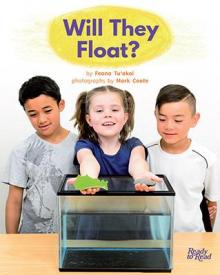
 Will they float cover.

We put on our scientist hats and started asking questions and making predictions.  Many people thought certain things would sink because they were too big. But then others said, well, cruise ships are big and they don't sink.  So then we started to think about what would make something sink.  We all agreed that something with holes in it usually sinks. 
When we read the book, we uncovered that the weight of something relative to its size effects whether it sinks or floats.  This was a slightly confusing concept, so we decided we better test it out. 
 We chose an object each and made a prediction about whether we thought that thing would float or sink and why.

Then we spent some time testing our hypotheses.  
Most of the Metal things sank straight away.  Some of the cardboard things floated for a little while and then sank.  The feather floated. The button sank.  The stick floated.  


We came back to our writing and explained what happened.  

This experience had us buzzing. We were thinking like scientists and trialing things.  We had a purpose for writing.  We were sharing our scientific data!  

Here are some of the other Big Books we have been exploring.  Stay tuned for some of the awesome learning that's come out of these!
Camouflage.Dragons dragons dragons.Lost.